Table Of Content
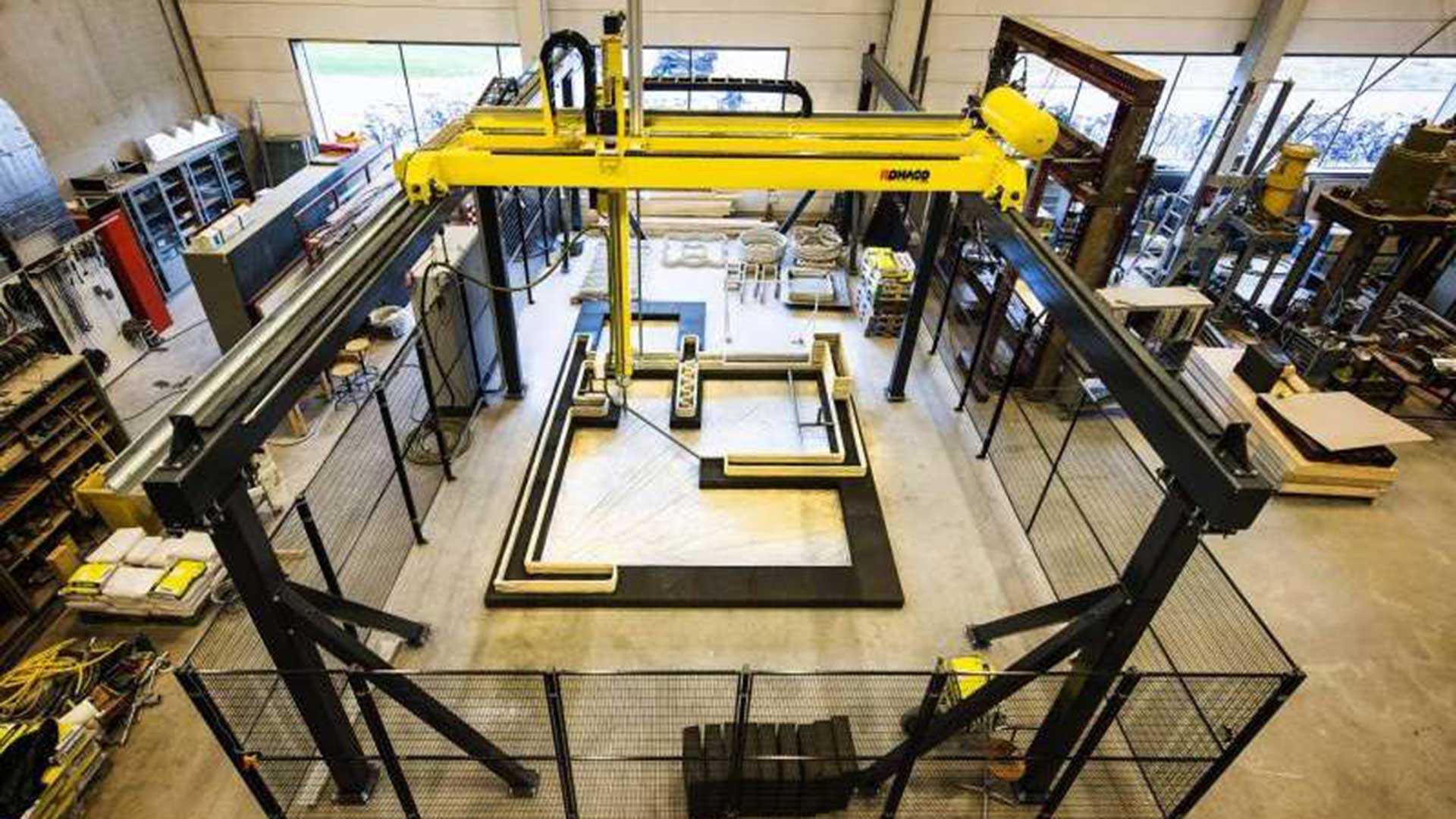
The companies developing construction 3D printers for houses are still refining the technology, and do not have enough of these machines to build thousands of houses yet. However, construction 3D printing is still in its infancy, and will likely come down in price quickly. The main costs are the materials and labor, and without any labor required except one operator to monitor the print, these costs are dramatically lower. The 1,400 square foot two-story home is made from special concrete material and boasts three bedrooms, two bathrooms, and a 2.5 door covered garage.
How much does a 3D-printed house cost?
Fortified by multi-shell walls casted with in-situ concrete, the curvy structure took nearly eight months to build, including 100 hours of active printing time. Amenities like a fireplace, bathtubs and a balcony are integral to the design, with spaces specifically molded for second-fix installations. Italian house 3D printing company WASP built ‘Gaia’, a 3D printed hut made from a mix of concrete and mud-based material. The 215 square foot structure took 10 days to complete, though the total time when accounting for all the furnishings and additions would be longer. The most extraordinary part is that the hut cost just $1,000 in materials to build, though this doesn’t factor in labor and other costs. 3D printing houses are typically faster than traditional construction methods due to the automated, precise nature of the process.
House 3D printing technology
ICON wishes to revolutionize the construction field with their Vulcan II printer. The whole process is designed to be user-friendly with a tablet-based interface, and ICON’s Lavacrete concrete mix is optimized to be easier to print. The capabilities of the ARCS line of concrete 3D printers become immediately evident once stepping foot inside of an SQ4D printed home. Some real estate marketplaces like Zillow, or some homeownership assistance programs like Habitat for Humanity, can sell 3D-printed houses. Nowadays, industrial-sized 3D printers have made it possible to print an entire house in less than 24 hours.
ICON
On average, the construction of a new 2,000-square-foot house generates more than 2,000 kilograms of construction waste, the vast majority of which ends up in landfills. One important contribution that 3D printing can make in terms of sustainable construction is the reduction of construction waste, related to framing. For the time being, 3D constructions are mainly made of mortar-concrete or plastic, materials that have a heavy environmental impact.

Printed homes, a solution to the housing shortage?
Portugal's first 3D printed house is printed in just 18 hours - Inceptive Mind
Portugal's first 3D printed house is printed in just 18 hours.
Posted: Fri, 26 Apr 2024 10:05:26 GMT [source]
The second story incorporates old-school methods, and is constructed out of black metal cladding and rich-colored timber. They share a color palette of green, white and terracotta and have all been sold. Their SQ4D ARCS 3D printer is a gantry-based printer capable of printing sizes up to 9.1(W) x 4.4(H) meters with a potentially infinite length.
"That would include the shell of the house — the roof, walls, floors system," Bird explains. "Long-term [infrastructure projects] could include cabinets, countertops, bath fixtures. And what gets me so excited about this project is that the technology isn't just solving a local problem, it could be replicated around the world." The world's largest 3D printer, seen Tuesday at the University of Maine in Orono, Maine, could offer an avenue to affordable housing in the region. Such printed buildings can be recycled, which is unique compared to current construction. “You can basically deconstruct it, you can grind it up if you wish, the 3D printed parts, and reprint with them, do it again,” Dagher said before the event.
3D house printing for construction, or construction 3D printing (C3DP), refers to the process of using a 3D printer to manufacture building components or even entire structures. The C3DP process typically starts with the creation of a 3D digital model of the desired structure. The model is then sliced into horizontal layers, and a robot or gantry system follows a predetermined path to deposit each layer of material on top of the previous one until the final structure is completed. Materials such as concrete, metal, or polymers are then printed layer by layer to form the 3D structure. This process can be used to create whole 3D-printed houses or to build the individual components of a house, such as walls, floors, and roofs. For more information, see our guide on 3D Printing vs. Traditional Manufacturing.
3D homes are unimaginably cheaper to construct, and it’s possible to build a complete house in 24 hours. And thanks to its natural composition, the home acts as a carbon sink, sequestering 46 tons of carbon dioxide per 600-square-foot unit. "Building many smaller structures in a short amount of time is what the housing crisis needs to address unhoused people and help to create larger communities quite quickly," says Goerhke. The printer’s frame fills up the large building in which it’s housed on the UMaine campus, and can print objects 96 feet long by 32 feet wide by 18 feet high (29 meters by 10 meters by 5.5 meters).
Construction printing services
With 3D printed housing specifically, it’s not yet possible to DIY this project. While this may become possible in the future, it should be left in the hands of the experts for now. I want to reiterate here the importance of refraining from building a 3D printed tiny home on your own. I tend to tell my friends that DIY building is for anyone, and you don’t have to have a ton of experience to be successful.
Meanwhile, its interior is characterized by warm wood, responding to Nordic building traditions. Ehrlich Yanai Rhee Chaney Architects (EYRC) created this alluring two-bedroom and two-bath house, known as the Quatro, which the team says will produce as much energy as it consumes using Mighty Buildings’ flexible, panelized kit of parts. Timeless, rooted-to-the-earth and truly a demonstration of what living could be like – it draws attention to the natural world through its sustainable biophilic design principles.
The house in Nantes, France built for £170K is an accurate cost for a habitable 3D printed building, not the outlandish claims to build a fully-functioning domicile for $4,000. Pioneered as a solution to the shortage of skilled bricklayers in the Netherlands, the first of these houses – and the first 3D printed house for sale – attracted over 20 interested buyers in its first week on the market. Traditionally, being a two-story building, construction would’ve taken place in two parts, off-site in a separate facility. But Kamp C ingeniously used the stationary COBOD BOD2 concrete printer to print it on-site in one piece.
In northern Italy, 3D-printed dome-shaped houses were made out of raw materials, such as clay. And in Dubai in the United Arab Emirates, the Dubai Municipality, a government building, stands as the largest 3D-printed structure in the world. Our current manufacturing facilities are in Canada, so the best idea of pricing I can give you at the moment is maybe $200 to $300 per square foot CAD, but of course labor and material costs vary by region. Building materials have seen a massive increase in price lately, that hasn’t helped matters either for determining cost.
Prominent 3D printed house constructor CyBe Construction created the house with their concrete 3D printer; able to print a single wall in between 60 to 90 minutes. This will further reduce costs and influence 3D printing’s adoption in housebuilding. Additionally, 10 electricians and other specialists worked on the inner workings of the office across the 17-day build.


No comments:
Post a Comment